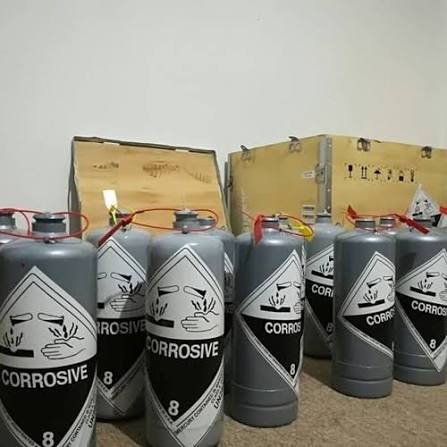
Introduction to Silver Liquid Mercury 99.999%
Silver Liquid Mercury 99.999%, also known as high-purity elemental mercury or metallic mercury, is a naturally occurring chemical element recognized for its distinctive silver-white appearance and liquid state at ordinary room temperature. Identified by the chemical symbol Hg and atomic number 80, mercury possesses unusual physical and chemical characteristics that have historically made it relevant to specialized scientific, laboratory, and industrial applications.
The Silver Liquid Mercury 99.999% [German Brand] product designation refers to a stated purity of 99.999%, commonly described as five-nines purity. This specification indicates a very high level of elemental mercury content, subject to confirmation through appropriate analytical documentation.
For True Form Chemicals, accurate chemical identification, product documentation, traceability, and responsible chemical management are important considerations when presenting specialized industrial chemicals. Buyers and professional organizations should verify the product’s actual country of origin, manufacturer identity, purity certification, and applicable regulatory status before considering any legitimate use.
What Is Silver Liquid Mercury?
Mercury is a chemical element belonging to the transition metals. Unlike most metals, elemental mercury remains liquid at ordinary room temperature. It is commonly called liquid mercury, metallic mercury, or quicksilver.
Its chemical symbol is Hg, derived from the Latin name Hydrargyrum. Its atomic number is 80, and its standard atomic mass is approximately 200.59.
Elemental mercury has a characteristic bright, silver-colored appearance. It is also exceptionally dense compared with many common metals. These distinctive physical properties have made it historically important in specialized measuring instruments, scientific research, and certain industrial processes.
Silver Liquid Mercury 99.999% Product Specifications
| Specification | Details |
|---|---|
| Product Name | Silver Liquid Mercury 99.999% |
| Brand Description | German Brand |
| Chemical Name | Elemental Mercury |
| Chemical Symbol | Hg |
| CAS Number | 7439-97-6 |
| Atomic Number | 80 |
| Atomic Weight | 200.59 g/mol |
| Stated Purity | 99.999% |
| Physical Appearance | Silver-white liquid metal |
| Physical State | Liquid at ordinary room temperature |
| Classification | Toxic substance |
| Purity Verification | Manufacturer Certificate of Analysis required |
The specifications above identify the stated product characteristics. Actual purity, manufacturing origin, packaging, and batch information must be verified through the relevant manufacturer documentation.
Understanding 99.999% Mercury Purity
The 99.999% purity designation represents a five-nines specification. In analytical chemistry, purity is an important measurement used to describe the proportion of a specified chemical substance within a material.
High-purity chemical specifications are particularly relevant in scientific research and specialized analytical environments, where the presence of impurities may affect measurement accuracy and experimental results.
However, a product label alone does not establish its actual purity. A Certificate of Analysis should identify the tested batch, analytical method, measured composition, and relevant impurity information.
For a product described as a German brand, buyers should also distinguish between German branding and verified German manufacturing origin. Manufacturer identification, country-of-origin documentation, and supply-chain records provide important supporting evidence.
Physical and Chemical Characteristics of Elemental Mercury
Elemental mercury has several distinctive characteristics that distinguish it from conventional industrial metals.
Silver-white appearance: Mercury has a bright metallic appearance that gives it its common description as silver liquid mercury.
Liquid at room temperature: Mercury has a melting point of approximately -38.83°C, allowing it to remain liquid under ordinary indoor temperature conditions.
High density: Its density is approximately 13.5 grams per cubic centimeter near room temperature, making it considerably heavier than many commonly encountered metals.
Electrical properties: Mercury has historically been used in certain specialized electrical components and scientific instruments.
Vapor formation: Mercury can evaporate at ordinary temperatures, producing an invisible and odorless vapor that presents a serious inhalation hazard.
These properties explain its historical scientific importance, but they also demonstrate why mercury requires strict environmental and occupational controls.
Historical Scientific and Industrial Significance
Elemental mercury has played an important historical role in several areas of science and industrial development.
Historically, it was incorporated into thermometers, barometers, pressure-measuring instruments, electrical switches, and certain laboratory equipment.
It has also been used in specialized industrial manufacturing processes. However, many traditional applications have been restricted or phased out because of the significant health and environmental risks associated with mercury exposure.
Today, mercury use is increasingly controlled through national regulations and international environmental agreements. Specialized research and other legally permitted applications require appropriate authorization and chemical management systems.
Why Purity Documentation and Product Traceability Matter
For organizations evaluating high-purity elemental mercury, documentation is an essential part of chemical identification and quality assurance.
Important documentation includes:
Certificate of Analysis (COA): Provides batch-specific analytical information and verified purity results.
Safety Data Sheet (SDS): Describes chemical hazards, exposure risks, and regulatory classifications.
Manufacturer identification: Establishes the identity of the actual producer.
Country-of-origin documentation: Supports claims regarding German manufacturing origin.
Batch traceability: Helps establish the identity and history of a particular chemical lot.
Regulatory documentation: Establishes whether the intended activity and movement of the material are legally authorized.
A high stated purity should never be treated as evidence that a substance is safe. Elemental mercury remains toxic regardless of its purity percentage.
Mercury Safety and Environmental Responsibility
Mercury is a highly hazardous substance that can cause serious health effects, particularly through exposure to its vapor. Inhalation can affect the nervous system and kidneys, while environmental releases can result in long-lasting contamination.
Mercury does not break down into harmless substances in the environment. It can enter water and soil systems and contribute to the formation of methylmercury, which can accumulate in aquatic organisms and move through food chains.
For these reasons, mercury must not be treated as an ordinary industrial commodity. Its storage, transportation, use, and waste management require appropriate professional oversight and compliance with applicable hazardous-material regulations.
The Minamata Convention on Mercury establishes international measures addressing mercury supply, trade, emissions, products, manufacturing processes, and environmentally sound waste management.
Organizations must verify applicable restrictions and authorization requirements before undertaking any activity involving elemental mercury.
True Form Chemicals – Industrial Chemical Information and Supply Solutions
True Form Chemicals provides an online platform featuring information about industrial chemicals and specialized chemical categories.
Our website, https://trueformchemicals.com/, serves as a reference point for businesses researching industrial chemical products, technical specifications, and chemical supply information.
For specialized substances such as elemental mercury, product identification, manufacturer verification, analytical documentation, and regulatory compliance must take priority over general product descriptions.
Professional organizations should consult applicable government authorities and qualified chemical safety professionals to establish whether a proposed activity is permitted.
Conclusion
Silver Liquid Mercury 99.999% [German Brand] is described as a high-purity elemental mercury product with a distinctive silver-white appearance and liquid physical state at ordinary room temperature.
Its stated five-nines purity specification makes analytical verification and manufacturer traceability particularly important considerations. Understanding its chemical characteristics, historical applications, toxicological properties, and regulatory restrictions is essential when evaluating information about this specialized chemical.
True Form Chemicals emphasizes accurate product information, responsible chemical management, and the importance of appropriate technical and regulatory documentation.
For additional information about industrial chemical categories and product specifications, visit True Form Chemicals at https://trueformchemicals.com/.