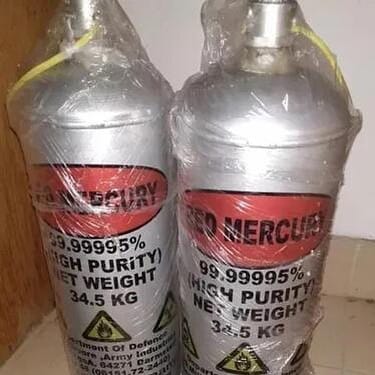
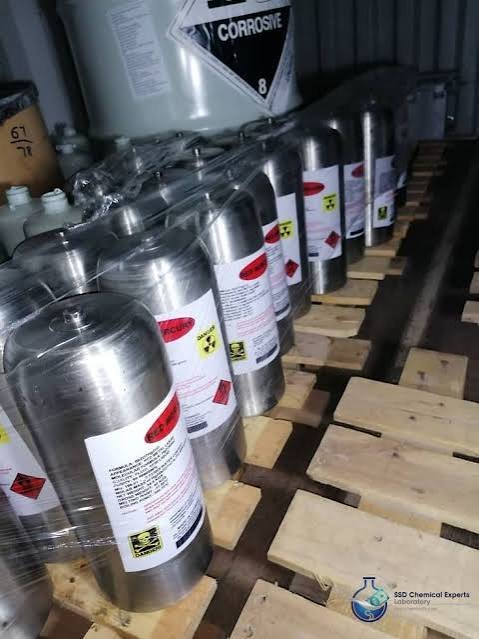
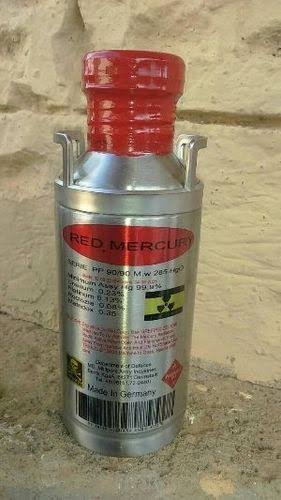

Description
Red Liquid Mercury 99.999% – Understanding Mercury Purity, Chemical Identity, and Safety
Red Liquid Mercury 99.999% is a product description that may appear in online chemical marketplaces and specialize material listings. However, understanding what this name actually represents also requires careful consideration of chemical identity, purity specifications, and product documentation. Mercury is also a naturally occurring metallic element with the chemical symbol Hg and atomic number 80. It is well also known for its bright silver appearance and unusual ability to remain liquid at ordinary room temperatures.
The term “red liquid mercury” is not an established scientific name for a recognize form of elemental mercury. Pure elemental mercury is characteristically silver-colored rather than red. Therefore, a product advertise as red liquid mercury should not automatically be considered 99.999% pure elemental mercury without independent laboratory verification.
For chemical buyers, industrial procurement professionals, and laboratory specialists, understanding these distinctions is essential. A reliable chemical product description should identify the actual substance, provide verifiable analytical information, and include appropriate safety documentation.
What Is Mercury?
Mercury is a metallic chemical element represented by the symbol Hg. It belongs to the group of metals and has several unusual physical characteristics that distinguish it from most other metallic substances.
One of its most recognizable properties is its liquid state at room temperature. Mercury also has a melting point of approximately -38.83°C, allowing it to remain liquid under normal indoor conditions.
Other important characteristics include:
- Chemical symbol: Hg
- Atomic number: 80
- Appearance: Bright, reflective silver-colored metal
- Physical state: Liquid at ordinary room temperature
- High density: Considerably denser than most common liquids
- Electrical properties: Conducts electricity as a metallic element
Mercury has historically been use in scientific instruments, measuring equipment, and selected industrial applications. However, many traditional uses have been restrict or replace because of its serious toxicity and environmental impact.
Understanding the Term Red Liquid Mercury
The expression “red liquid mercury” also frequently encounter in questionable chemical advertisements and unsupported product claims. It is important to distinguish marketing terminology from recognize chemical identification.
Elemental mercury is naturally silver-colored. If a material appears red, its appearance may be associated with a different chemical compound, a suspension, a mixture, a container, or an added substance. Color alone cannot establish chemical identity or purity.
Some mercury-containing compounds have distinctive colors. For example, mercury sulfide can occur as a red solid mineral known as cinnabar. However, cinnabar is not liquid elemental mercury, and its chemical properties are different.
Consequently, buyers should not assume that a red-color substance is elemental mercury simply because a seller uses that description.
What Does 99.999% Purity Mean?
A purity specification of 99.999% is commonly refer to as five-nines purity. It represents an extremely high level of material purity when establish through an appropriate analytical method.
For a substance measure on a mass basis, 99.999% purity corresponds to approximately 10 parts per million (ppm) of impurities.
However, a purity percentage is meaningful only when the chemical identity of the material has been establish. A product cannot be verify as 99.999% pure elemental mercury simply through its appearance, advertised name, or seller description.
Professional chemical verification should include:
- Chemical identification: Confirmation of the actual chemical substance.
- Certificate of Analysis: Batch-specific documentation showing measured purity.
- Analytical methodology: Identification of the laboratory testing method.
- Impurity information: Details about detected impurities and their concentrations.
- Manufacturer traceability: Verifiable manufacturer and batch information.
A legitimate laboratory report is essential when evaluating claims involving exceptionally high chemical purity.
Difference Between Elemental Mercury and Mercury Compounds
Elemental mercury and mercury-containing compounds are chemically different materials.
Elemental mercury consists of mercury atoms in metallic form and is represented by Hg. It has a characteristic silver appearance and remains liquid at ordinary room temperatures.
Mercury compounds contain mercury chemically combine with other elements. Their properties vary depending on their chemical composition. Some are solids, some have distinctive colors, and their toxicity and environmental behavior can differ significantly.
For example, mercury sulfide is a mercury-containing compound with a well-known red mineral form. Its appearance does not make it equivalent to liquid metallic mercury.
Understanding this difference is also important for chemical identification, laboratory testing, safe storage, and regulatory compliance.
Historical and Scientific Importance of Mercury
Mercury has played an important role in the development of scientific instruments and industrial technologies.
Historically, it was use in thermometers and barometers because of its predictable physical behavior and high density. It also appear in selected electrical switches, industrial processes, and laboratory equipment.
Many of these traditional applications have transitioned to safer alternatives because mercury exposure can cause serious health problems.
Today, mercury is also primarily a subject of specialized chemical research, environmental monitoring, and control scientific investigation. Its also use is subject to significant restrictions in many countries.
Why Chemical Documentation Matters
When purchasing specialized chemicals, accurate documentation is more important than promotional descriptions.
Buyers evaluating a product advertised as Red Liquid Mercury 99.999% should also request documentation that establishes its actual chemical identity and composition.
Important documents include:
- A valid Safety Data Sheet (SDS).
- A batch-specific Certificate of Analysis (COA).
- Verified manufacturer information.
- Chemical composition and analytical test results.
- Country-of-origin documentation where applicable.
- Relevant import, export, and regulatory approvals.
These documents help distinguish legitimate chemical materials from misleading or unsupported marketplace claims.
Mercury Safety and Environmental Considerations
Mercury is also highly toxic substance that requires strict occupational and environmental controls. Exposure to mercury vapor can damage the nervous system, kidneys, and other organs.
Mercury can release invisible vapor at room temperature, making exposure particularly dangerous in enclosed or poorly ventilated environments.
Professional mercury management requires suitable containment, exposure monitoring, trained personnel, and approved hazardous-waste procedures.
Mercury must never be pour into drains, dispose of with ordinary household waste, or handle casually. Spills require appropriate professional assessment and cleanup. Ordinary vacuum cleaners and household brooms must not be use because they can spread contamination.
International agreements, including the Minamata Convention on Mercury, address mercury-related risks and seek to reduce harmful releases into the environment.
Responsible Chemical Procurement
Organizations purchasing mercury-related materials should prioritize chemical identification, verified documentation, supplier legitimacy, and legal compliance.
A product’s advertise color or purity percentage should never replace independent analytical evidence. Buyers should also verify the material’s chemical name, CAS Registry Number where applicable, actual composition, and intended legal use.
Importation, distribution, possession, and use of mercury may be restricted depending on the country and application. Regulatory requirements should therefore be check before any procurement decision.
| Parameter | Details |
|---|---|
| Product Name | Red Liquid Mercury |
| Form | Liquid |
| Color | Deep red to reddish-brown |
| Purity (claimed) | 99.99% (as per seller specification) |
| Weight | 10 grams |
| Packaging | Sealed glass or metal vial |
| Density | Approx. 13.5–14 g/cm³ (varies) |
| Boiling Point | ~357°C (subject to composition) |
| Electrical Conductivity | High (if genuine mercury content) |
| CAS Number | Not officially recognized (varies by claim) |
| Storage Conditions | Cool, dry, and secure area away from sunlight and oxidizers |
Conclusion
Red Liquid Mercury 99.999% is a product description that requires careful scientific verification. Pure elemental mercury is characteristically silver-colored, while red-colored mercury-containing materials may represent entirely different chemical substances.
Furthermore, The advertise 99.999% purity level should not be accepted without a valid Certificate of Analysis and reliable laboratory confirmation of chemical identity. For businesses, laboratories, and chemical procurement professionals, transparency, safety documentation, and regulatory compliance are essential.
Understanding the difference between elemental mercury and mercury compounds also helps prevent misleading purchasing decisions and supports responsible chemical management. Accurate product identification and verified analytical information should always come before appearance-based or unsupported purity claims.