

Description
Acetic Acid: A Versatile Organic Compound with Wide Industrial and Household Applications
Acetic acid, also known as ethanoic acid, is an important organic acid with the chemical formula CH₃COOH. It is widely recognize for giving vinegar its sour taste and pungent smell. While dilute acetic acid is commonly use in the food industry, glacial acetic acid (purity ≥99%) is a concentrated and industrial-grade form use across multiple sectors including chemicals, pharmaceuticals, textiles, plastics, and agriculture.
Due to its high reactivity, solvent properties, and biodegradability, acetic acid has become an indispensable chemical in both industrial and laboratory settings. It plays a central role in organic synthesis and is also used as a raw material or intermediate for producing a wide range of compounds.
Specifications of Acetic Acid
| Property | Specification |
|---|---|
| Chemical Name | Acetic Acid |
| IUPAC Name | Ethanoic Acid |
| Chemical Formula | CH₃COOH |
| CAS Number | 64-19-7 |
| Purity | ≥ 99.8% (Glacial Acetic Acid) |
| Appearance | Clear, colorless liquid |
| Odor | Pungent, vinegar-like |
| Density @ 20°C | 1.049 g/cm³ |
| Boiling Point | 118°C (244°F) |
| Melting Point | 16.6°C (Glacial form solidifies) |
| Solubility | Miscible with water, ethanol, ether |
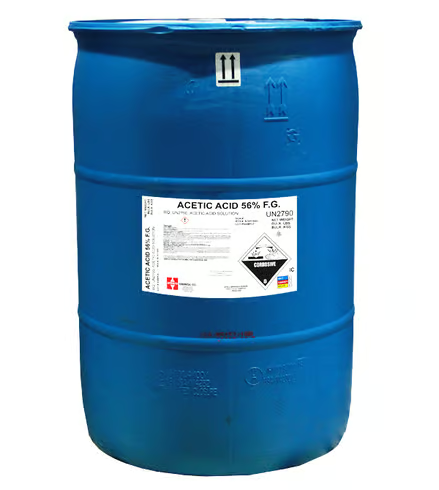
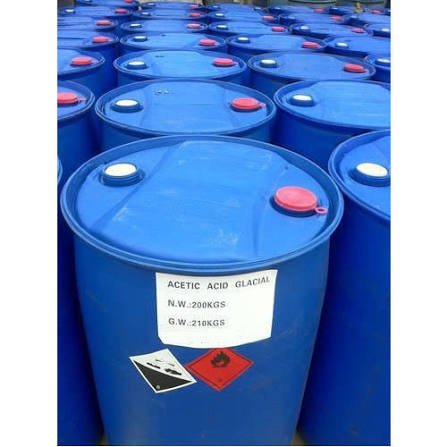
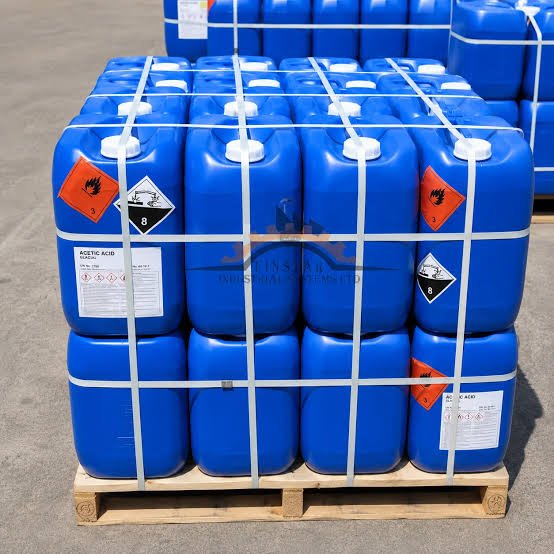
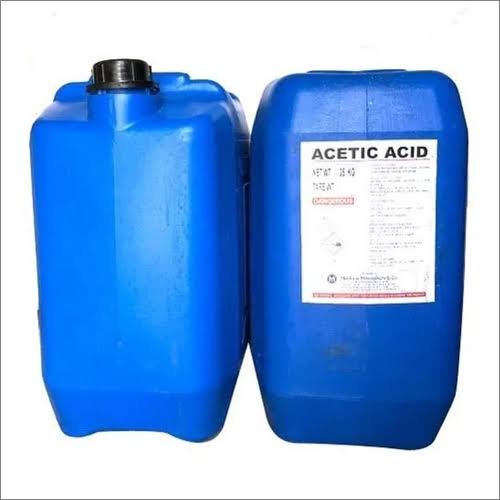
| Packaging | 30–200 kg drums, IBC tanks, bulk loads |
| Shelf Life | Up to 2 years in sealed containers |
Applications of Acetic Acid
1. Chemical Manufacturing
Acetic acid is a precursor to key industrial chemicals such as:
-
Acetic anhydride
-
Vinyl acetate monomer (VAM)
-
Terephthalic acid for PET plastic
These compounds are essential in manufacturing plastics, synthetic fibers, films, and adhesives.
2. Food Industry
In dilute form, acetic acid (usually 4–8%) is used as vinegar and as a food preservative (E260). It helps inhibit bacterial growth and adds flavor to various food products.
3. Pharmaceuticals
Use in the synthesis of aspirin, acetaminophen, and other medicines. It also acts as a pH regulator and antibacterial agent in some formulations.
4. Textile and Dyeing
Acetic acid is use to maintain the pH level in dye baths and as a mordant to fix dyes on fabrics, especially in wool and silk processing.
5. Agriculture
It serves as a herbicide and pH regulator in fertilizers and pesticide formulations.
Benefits of Acetic Acid
-
Versatile — applicable in food, chemical, textile, and pharmaceutical industries
-
Cost-effective — widely available and affordable
-
Eco-friendly — biodegradable and breaks down into non-toxic components
-
Strong solvent — excellent at dissolving both polar and non-polar substances
-
Regulatory approved — safe for food and pharmaceutical use in diluted forms
Safety and Handling
Though naturally occurring in vinegar, concentrated acetic acid (glacial form) is corrosive and must be handle with care:
-
Use gloves, goggles, and protective clothing
-
Ensure adequate ventilation in workspaces
-
Avoid contact with skin and eyes — causes burns and irritation
-
In case of spill, neutralize with sodium bicarbonate and wash with plenty of water
Conclusion
This is a critical chemical in both industrial and consumer applications, known for its reactivity, biodegradability, and cost-efficiency. From acting as a key raw material in plastics to a natural preservative in food, this continues to prove its value across countless sectors.
Its versatility, availability, and eco-friendly nature make it a staple ingredient in modern chemistry and industry.